Scaling Distribution and Trading Enterprises Beyond Egypt with an Enterprise ERP Foundation
Distribution and trading enterprises often appear operationally simpler than manufacturing groups. There are no factories, no production lines, and no complex bills of materials. Yet once these enterprises expand beyond Egypt, complexity accelerates faster than most leadership teams anticipate.
Multiple warehouses across countries, different pricing models per market, currency exposure, and fragmented customer data quickly turn operational growth into structural strain. What initially feels like operational flexibility gradually becomes a lack of control. Executives begin asking basic questions that systems can no longer answer confidently: Which markets are profitable? Where is inventory truly sitting? How exposed are we to currency and credit risk?
This is where distribution and trading enterprises realize that scale without system architecture is not growth. It is accumulated operational risk that compounds with every new market.
Why Fragmented Systems Fail Distribution Enterprises at Scale
Most large distribution groups expand regionally using a patchwork of systems. Local ERPs, accounting tools, warehouse systems, and spreadsheets evolve independently in each country. While this approach may feel pragmatic in early expansion phases, it breaks down as transaction volume increases.
Leadership teams lose real-time visibility. Inventory figures differ between systems. Credit exposure is calculated manually. Sales performance becomes difficult to compare across markets. Decision-making slows down, not because teams lack data, but because they no longer trust it.
At enterprise scale, fragmentation does not create agility. It creates blind spots that delay decisions and amplify risk.
Enterprise Distribution Requires Central Control Without Operational Bottlenecks
Distribution and trading enterprises operate in fast-moving environments. Pricing changes rapidly, customer demand shifts unexpectedly, and supply chains are constantly under pressure. Central control is necessary, but heavy centralization can paralyze operations.
The challenge is not choosing between control and flexibility. The challenge is designing a system that allows central governance while preserving local execution speed.
This balance is what separates scalable distribution groups from organizations that stall under their own complexity.
Odoo ERP as an Operating Backbone for Multi-Country Distribution Groups
Odoo provides a unified ERP environment that treats multi-company and multi-country operations as a core capability, not an exception. Distribution groups can manage multiple legal entities, warehouses, and sales channels within a single system while maintaining country-specific configurations.
Each market can operate with its own pricing logic, tax structure, and customer terms, while headquarters retains consolidated oversight. Inventory visibility becomes real-time across all locations. Financial data aligns automatically. Management decisions are no longer delayed by manual consolidation cycles.
Instead of acting as a passive reporting tool, ERP becomes an active operational control layer that guides daily execution.
Inventory Visibility as a Strategic Advantage, Not a Reporting Function
In distribution and trading enterprises, inventory is not just stock. It is working capital, market responsiveness, and risk exposure.
Odoo allows enterprises to track inventory movement across warehouses, countries, and internal transfers without losing traceability. Leadership gains a unified view of stock availability, slow-moving items, and exposure across regions. This enables proactive redistribution decisions instead of reactive stock corrections.
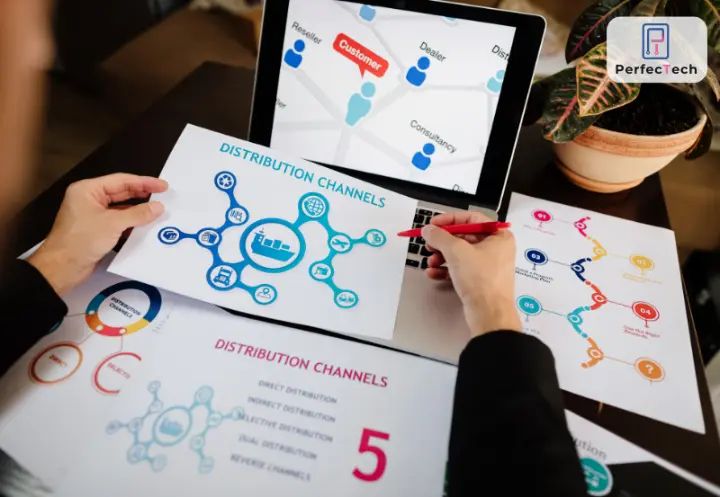
When inventory data is reliable and real-time, enterprises shift from firefighting shortages to optimizing availability and cash flow.
Managing Pricing, Margins, and Currency Exposure Across Markets
One of the most underestimated challenges in regional distribution is pricing consistency and margin control. Different currencies, customer segments, and competitive landscapes create pricing complexity that quickly erodes profitability if unmanaged.
Odoo enables centralized pricing strategies with local flexibility. Enterprises can define pricing frameworks while allowing market-level adjustments. Margins can be analyzed by country, customer segment, or product line. Currency exposure becomes visible instead of hidden inside spreadsheets.
This transforms pricing from a reactive adjustment into a controlled, measurable strategic function.
Credit Control and Customer Risk at Enterprise Scale
As distribution enterprises expand, customer credit risk grows in parallel. Managing receivables across countries without unified systems often leads to delayed collections and uncontrolled exposure.
With an integrated ERP environment, credit limits, payment terms, and receivables are managed consistently across the group. Finance teams gain a consolidated view of exposure while local sales teams operate within defined risk boundaries.
This alignment protects cash flow without disrupting commercial momentum.
Intercompany Trading Without Financial Confusion
Large distribution groups frequently move goods internally between subsidiaries. Without structured intercompany workflows, these transactions create accounting discrepancies and reconciliation delays.
Odoo enables structured intercompany trading with full traceability. Internal sales and purchases are recorded automatically. Profit handling is transparent. Financial consolidation becomes reliable instead of manual.
This clarity is critical for enterprise governance, audit readiness, and executive confidence in reported numbers.
Why ERP Architecture Defines the Speed of Regional Expansion
Expansion speed is not limited by market opportunity. It is limited by operational readiness.
Distribution groups with enterprise-grade ERP architecture can onboard new countries, warehouses, or sales teams without redesigning their systems. Processes scale predictably. Reporting remains consistent. Governance is maintained without operational friction.
This allows leadership to focus on growth strategy instead of operational stabilization.
Why Enterprise Distribution Groups Choose Perfect Tech Egypt
Enterprise ERP success depends on understanding how large trading and distribution groups actually operate. Perfect Tech Egypt approaches ERP as an architectural foundation rather than a software deployment.
The focus is on designing systems that support regional growth, financial control, and operational transparency from day one. This ensures that ERP remains an enabler as the enterprise evolves, rather than a constraint that must be replaced later.
Final Perspective: Distribution Scale Requires System Intelligence
For enterprise distribution and trading groups, ERP is not a back-office tool. It is the system that determines visibility, speed, and financial resilience across markets. The right ERP architecture transforms regional expansion from operational risk into a controlled growth strategy.
Modern ERP solutions support logistics and production automation by integrating inventory management, production planning, shipment tracking, and financial operations into a single unified system.
Retail-experienced ERP providers can be identified by reviewing their case studies, industry references, and ability to support omnichannel operations such as physical stores, warehouses, and digital sales platforms.
ERP systems are best acquired through certified solution partners who provide end-to-end services, including requirements analysis, system implementation, customization, and hands-on user training. This ensures successful adoption and operational readiness.
ERP providers with local technical support maintain on-ground teams within the same region or market. This ensures faster response times, better understanding of local regulations, and more effective system support for enterprise operations.