Regional Expansion as a Stress Test for Egyptian Manufacturing Enterprises
When Egyptian manufacturing enterprises expand beyond national borders, the challenge is rarely related to production capacity or the physical act of opening new factories. The real pressure appears in areas that were previously invisible. Reporting delays become longer, financial figures stop aligning across subsidiaries, and decision-making turns reactive rather than strategic.
Most enterprise manufacturers discover that their operational structure was designed for local efficiency, not regional coordination. Each country gradually develops its own processes, reporting logic, and operational assumptions. Headquarters ends up managing the group through delayed spreadsheets and fragmented dashboards, which erodes confidence in data and slows executive decisions.
This is the exact moment where expansion stops being a growth story and turns into a real systems stress test that exposes structural weaknesses.
Operational Unification Beyond Standardization: Visibility, Control, and Governance
Unification is often misunderstood as standardization. In reality, enterprise unification is about visibility, governance, and control without disrupting local operational effectiveness.
For large manufacturing groups, unification means that leadership can see real-time production performance across countries, compare margins between factories, and understand inventory exposure without waiting for manual consolidation. At the same time, each subsidiary must remain compliant with local regulations, labor structures, and tax environments.
True unification is not about forcing sameness. It is about establishing a shared operational language that aligns decision-making, performance measurement, and governance across the entire group.
Where Traditional ERP Systems Break Under Enterprise Manufacturing Complexity
Traditional ERP platforms often perform well in controlled, single-country environments. However, as soon as complexity increases through multiple legal entities, currencies, and regulatory frameworks, their limitations become clear.
Enterprise manufacturing groups often face rigid system architectures that resist adaptation. Customizations become expensive and slow, intercompany transactions require workarounds, and reporting cycles stretch beyond what executive leadership can tolerate. Instead of enabling growth, the system becomes a bottleneck.
The problem is not ERP adoption. The problem is relying on ERP architectures that were never designed to support regional manufacturing ecosystems at enterprise scale.
Odoo ERP as a Framework for Centralized Intelligence and Decentralized Execution
Odoo approaches enterprise complexity from a fundamentally different perspective. Its architecture is built to support multiple companies, countries, and operational models within a single ecosystem, rather than treating expansion as an afterthought.
Manufacturing groups can operate several legal entities simultaneously while maintaining separate accounting rules, operational workflows, and tax treatments. At the same time, headquarters gains consolidated oversight without disrupting local autonomy.
This balance between central visibility and local control is what allows manufacturing enterprises to scale regionally without losing operational clarity or execution speed.
Coordinating Cross-Border Manufacturing Without Sacrificing Efficiency
Cross-border manufacturing coordination requires more than shared reports. It requires synchronized planning, cost transparency, and operational comparability.
Odoo enables enterprises to manage production planning across multiple factories while respecting local constraints such as labor availability, subcontracting models, and material sourcing. Production costs are tracked at the factory level, allowing leadership to understand performance differences across regions rather than relying on aggregated averages.
This level of transparency transforms manufacturing strategy from intuition-driven decisions into data-backed operational optimization.
Eliminating Intercompany Friction in Complex Manufacturing Groups
Intercompany complexity is one of the most underestimated risks in enterprise manufacturing groups. Internal sales, cross-border inventory transfers, and shared services often create accounting confusion and reconciliation delays.
With the right ERP architecture, intercompany transactions become structured rather than improvised. Internal manufacturing flows are recorded with full traceability, profit is handled transparently, and reconciliation becomes an automated process rather than a monthly firefight.
This not only improves financial accuracy but also reinforces internal trust between subsidiaries and headquarters by removing ambiguity from internal transactions.
The CFO Perspective: From Delayed Reporting to Real-Time Consolidation
Financial consolidation is not just an accounting task. It is a strategic capability.
When consolidation is delayed, leadership operates on outdated information. When it becomes real-time, executives can assess exposure, cash flow, and profitability across countries instantly. Currency fluctuations, operational inefficiencies, and margin pressures become visible before they escalate into risks.
This shift allows CFOs to move from retrospective reporting to proactive financial leadership based on live, consolidated data.
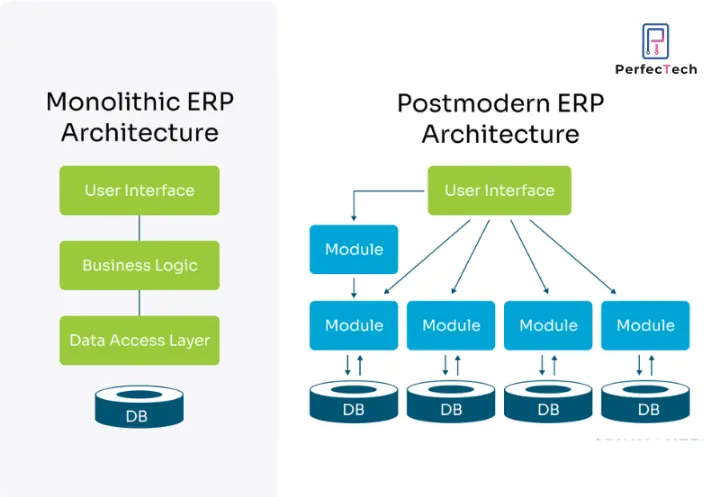
ERP Architecture as the Foundation for Compliance and Audit Readiness
Enterprise manufacturing groups face growing regulatory scrutiny, especially when operating across borders. Compliance failures often occur not because of misconduct, but because systems lack transparency.
A unified ERP environment ensures that approvals, transactions, and operational decisions are recorded consistently across entities. Audit trails are no longer reconstructed after the fact; they are embedded into daily operations.
This significantly reduces regulatory risk while improving operational discipline and accountability across the group.
Why Odoo Aligns Naturally with the Regional Expansion Path of Egyptian Manufacturers
Egyptian manufacturing enterprises expanding into the Gulf, Africa, or Europe operate under unique pressures. Currency volatility, fast-paced expansion timelines, and cost competitiveness all demand operational agility.
Odoo’s modular and scalable structure allows enterprises to deploy ERP strategically rather than all at once. Companies can start with core manufacturing and finance, then expand into additional countries or factories without disrupting existing operations.
When implemented with the right enterprise architecture, ERP becomes a controlled growth accelerator rather than an operational constraint.
Why Enterprise ERP Success Is Defined by Architecture, Not Software
Enterprise ERP is not a software project. It is an organizational transformation.
Perfect Tech Egypt approaches enterprise ERP from an architectural perspective. The focus is not only on deploying ERP, but on designing systems that reflect how large manufacturing groups actually operate across borders. This ensures scalability, governance, and long-term value rather than short-term functionality.
Final Perspective: ERP as a Strategic Lever for Enterprise Scale and Control
For manufacturing holding companies, ERP decisions directly shape regional competitiveness, financial resilience, and executive visibility. The right ERP environment does not simply support daily operations. It defines how leadership sees the business, anticipates risk, and guides expansion across borders.
If your manufacturing group is expanding beyond Egypt and struggling with fragmented systems, Perfect Tech Egypt helps design enterprise-grade Odoo ERP architectures built for regional scale.
Frequantly Asked Questions
Yes. With proper enterprise architecture, Odoo supports complex multi-company and multi-country manufacturing environments.
Yes. Odoo manages multi-currency accounting with consolidated financial visibility across regions.
Yes. Intercompany production, inventory transfers, and internal transactions are fully supported and traceable.
Odoo is modular by design, allowing enterprises to add countries, factories, and subsidiaries without reimplementation.
Perfect Tech specializes in enterprise-grade ERP architecture, ensuring scalability, compliance, and operational alignment for large manufacturing groups.